
In this guide
- What decides the book printing cost per copy?
- How the book printing price falls as quantity rises
- Use the book printing cost calculator
- How paper choice changes your book printing costs
- Choosing a binding for your budget
- Why buyers choose book printing in India
- Seven ways to lower your book printing cost
- Costs that are easy to forget
- Buying from outside India? What an FOB price includes
- What to send for an exact quote
Your book printing cost in India comes down to six choices: quantity, page count, trim size, paper, colours and binding. The more copies you print in one run, the lower the price of each book, because the set-up cost is shared. This guide explains each factor so you can plan a realistic budget and ask for the right quote.
What decides the book printing cost per copy?
Every offset book quote is built from the same ingredients. Change any one of them and the price per copy moves. Here they are, in order of impact.
- Quantity. The single biggest factor. Plates, press set-up and make-ready cost the same whether you print 500 copies or 5,000. The more you print, the lower the cost of each book.
- Page count. Books are printed in sections of 8, 16 or 32 pages. A page count that fills whole sections is the most economical. Two extra pages can cost almost as much as sixteen.
- Trim size. Standard sizes such as A5, B5 and A4 fit press sheets efficiently. Unusual sizes waste paper and push the price up.
- Paper. Uncoated woodfree paper (58–90 GSM) is the economical choice for text-heavy books and textbooks. Coated art paper (90–170 GSM) costs more but makes colour images sharper.
- Colours. Black-only inside pages are far cheaper than full colour (CMYK). Many textbooks use black inside and a full-colour cover.
- Binding and finishing. Saddle stitching is cheapest, then perfect binding, section sewing and hardbound (case) binding. Lamination, spot UV, foil and embossing add cost to the cover.
How the book printing price falls as quantity rises
Offset printing has a fixed set-up cost: making plates on our CTP machines, preparing the press and running make-ready sheets until the colour is right. That cost is spread over the whole run. Printing 500 copies means each book carries a large share of it. Printing 5,000 copies spreads it much more thinly.
This is why the book printing price per copy drops steeply at first and then levels off. The paper, ink and binding for each extra copy still cost money, so the curve never reaches zero — but the set-up share gets smaller with every book.
| Run length | What happens to the price per copy | Usually best method |
|---|---|---|
| Under about 300 copies | High, because set-up is shared by few books | Digital printing |
| About 500–2,000 copies | Falls quickly as quantity rises | Sheet-fed offset |
| 5,000 copies and above | Low and levelling off | Sheet-fed or web offset |
For very short runs, reprints or proof copies, digital printing is often cheaper because it needs no plates. For school-book seasons and long trade runs, our heat-set web presses, which reach up to 60,000 impressions an hour, keep the price per copy low.
[ Worked example prices for 500, 1,000 and 5,000 copies of a standard A5 book — Printheal to confirm. ]
Use the book printing cost calculator
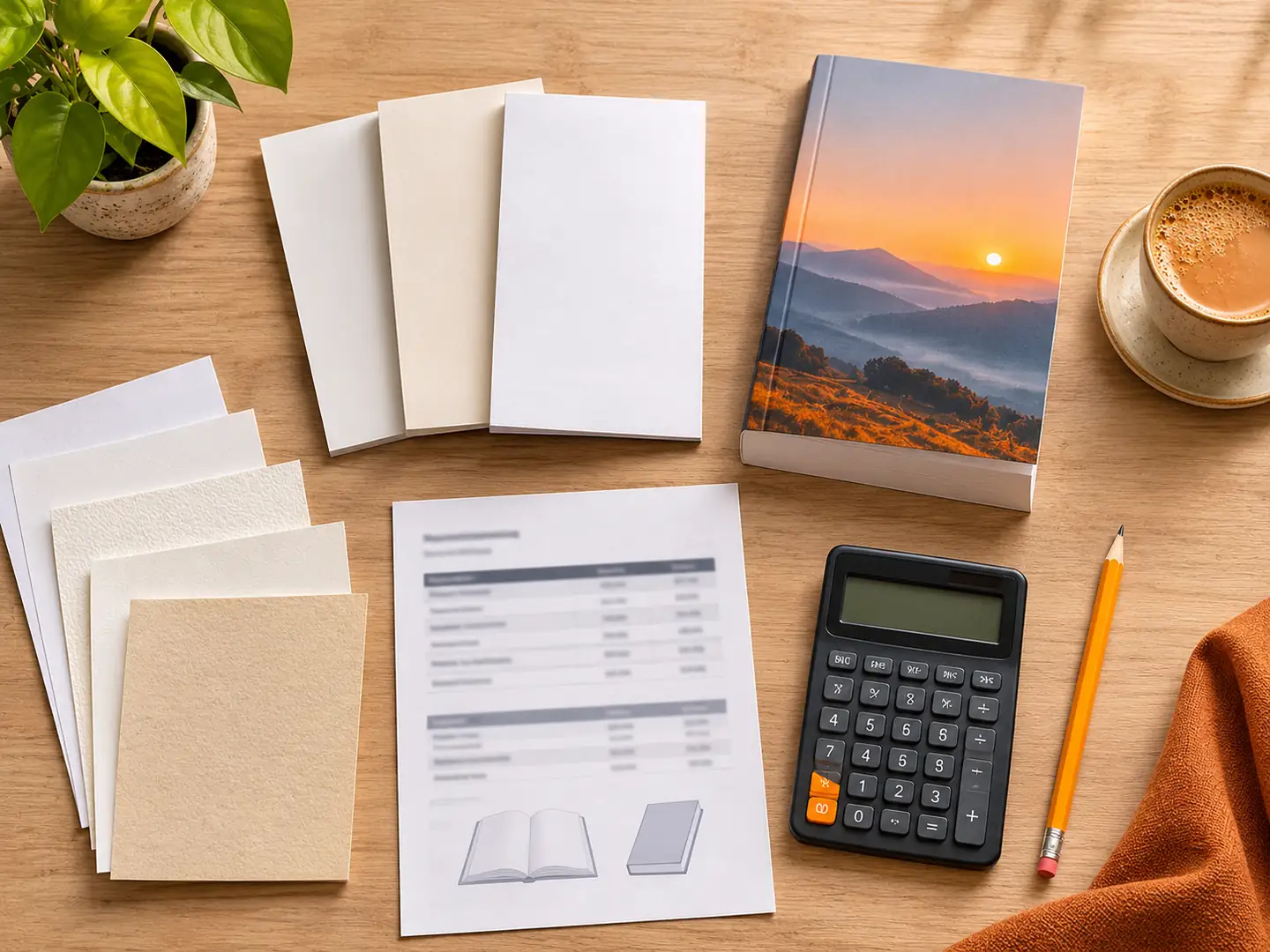
The quickest way to see how these choices interact is our free book printing cost calculator. Pick the size, pages, paper, colours, binding and quantity, and it shows a live price per copy and total in US dollars, euros or Indian rupees. Change one option at a time and you will see exactly what moves your book printing costs.
The calculator gives an estimate. For a confirmed quotation, send us your print-ready PDF and specifications through the contact page or WhatsApp.
How paper choice changes your book printing costs
Paper is often the largest material cost in a book. Heavier paper costs more per sheet and adds weight, which also raises freight for export orders.
| Paper | Typical use | Effect on price |
|---|---|---|
| Uncoated woodfree, 58–70 GSM | Novels, textbooks, religious books | Most economical |
| Uncoated woodfree, 80–90 GSM | Workbooks, premium text books | Moderate |
| Coated art, 90–170 GSM | Colour books, children's books, catalogues | Higher |
| Art card, 250–300 GSM | Covers | Cover only |
If your book is mostly text, uncoated paper reads well and keeps the cost down. Save coated paper for pages where colour images really matter.
Choosing a binding for your budget
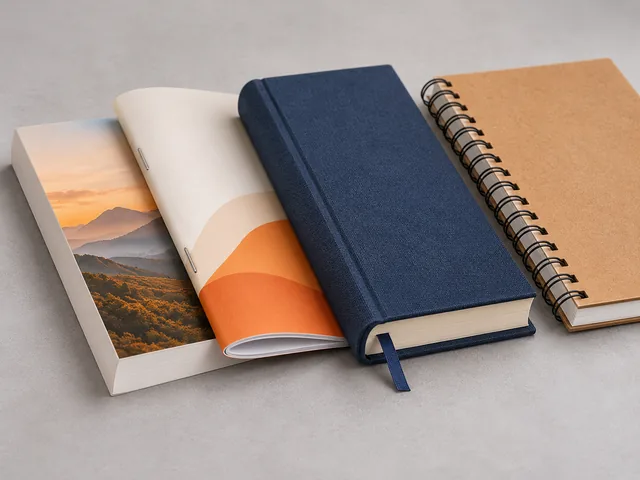
| Binding | Best for | Relative cost |
|---|---|---|
| Saddle stitch | Workbooks, booklets and children's readers up to about 64 pages | Lowest |
| Perfect binding | Novels, reports and most paperbacks of 48+ pages | Low |
| Section sewn | School textbooks that must survive daily use for a full year | Medium |
| Hardbound (case) | Premium books, reference titles and yearbooks | Highest |
For school textbooks we usually recommend section-sewn binding. It costs a little more than perfect binding, but the book opens flat and the pages do not fall out. Our guide to book binding types compares each option in detail.
Why buyers choose book printing in India
Publishers in India and abroad print with us for three practical reasons: capacity, control and price. We run two production units in Delhi NCR, 24 hours a day in three shifts. Prepress, printing, binding and export packing all happen in-house, under ISO 9001:2015 certified processes, so there are no brokers adding a margin. You can see the presses and binding lines on our infrastructure page.
Seven ways to lower your book printing cost
- Print a larger quantity in one run instead of several small reprints.
- Adjust your page count to fill whole sections (multiples of 16 or 32).
- Choose a standard size such as A5, B5 or A4.
- Use black-only inside pages where colour is not essential.
- Pick uncoated woodfree paper for text-heavy books.
- Keep premium finishes such as spot UV and foil to the cover only.
- Send a correct, print-ready PDF so there are no prepress delays or corrections.
Costs that are easy to forget
A printing quote covers printing and binding. A few other items can change what you finally pay, so it helps to ask about them up front.
- Prepress corrections. If the PDF needs fixing — missing bleed, RGB images, wrong page size — the work and the delay add cost. A correct file avoids both.
- Proofs. A digital proof is standard. Extra hard-copy proofs or bound samples may be charged.
- Packing. Shrink-wrapping in small bundles, custom cartons or palletising for export are usually listed separately on domestic jobs.
- Delivery. Ex-works Delhi, delivery to another Indian city and FOB Indian port are priced differently.
- GST. Domestic invoices carry GST at the applicable rate; check how your quote shows it.
Buying from outside India? What an FOB price includes
For international buyers we quote FOB (Free On Board) Indian port. The price includes printing, binding, export packing and loading onto the vessel in India. Sea or air freight to your port, insurance and destination duties are separate, and we can arrange freight on request.
Publishers in Ghana and Nigeria can read our guides on printing for Ghana and printing for Nigeria for shipping and ordering details.
What to send for an exact quote
- Trim size and page count.
- Inside paper and cover board.
- Colours inside and on the cover.
- Binding and any cover finish.
- Quantity — or two quantities to compare.
- Delivery: ex-works Delhi, an Indian city, or FOB Indian port.
With these details we can confirm the price, paper availability and production time. If you are still deciding, start with the instant quote and see our book printing services.
 Seasonal
 Publishing
 Binding
 Tax